
How Business Blogging Can Help Your Website Get Found
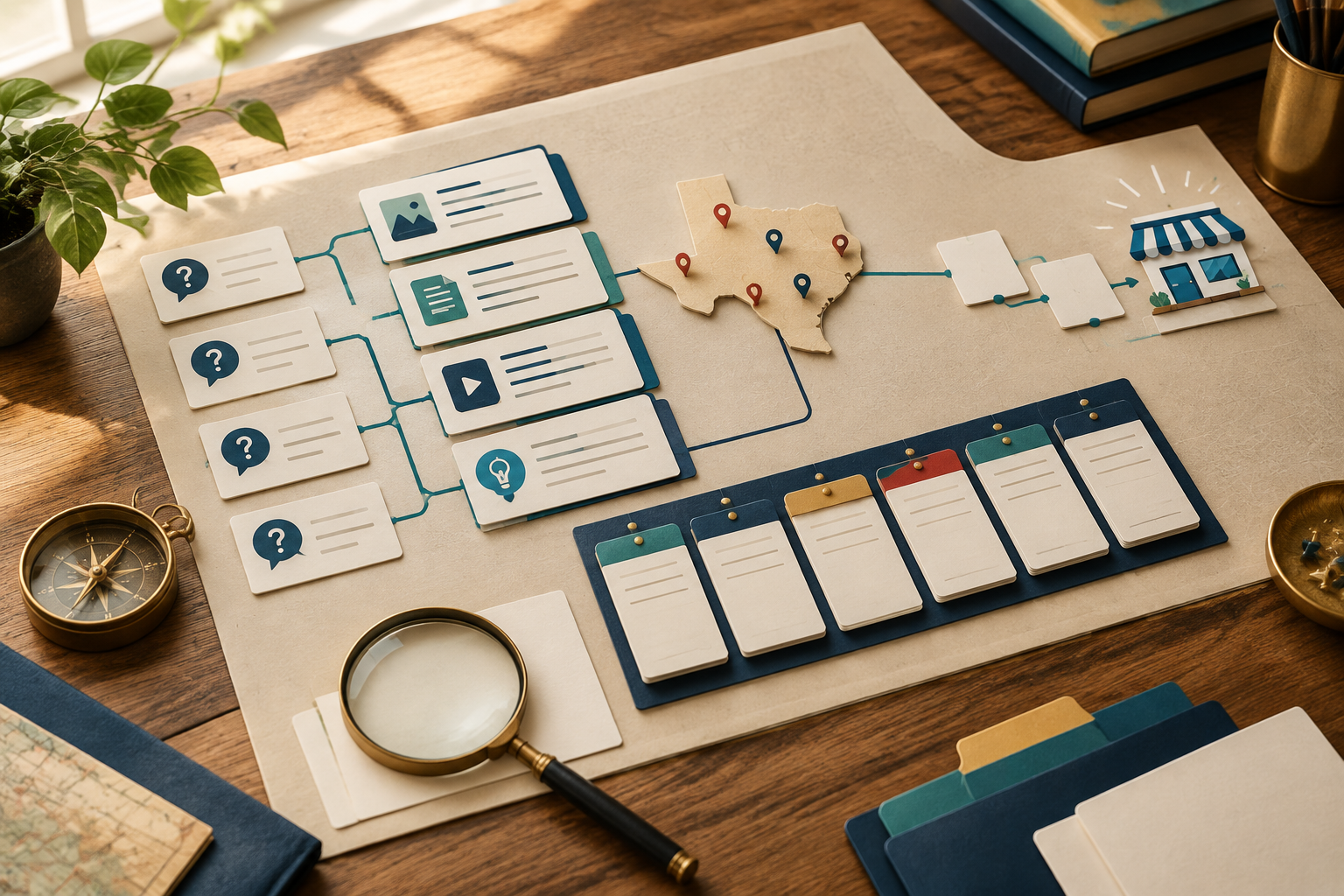
A business blog is not simply a place to post company news. When planned well, it helps your website answer the questions people ask before they are ready to call, request a quote or make a purchase.
For a small business, this can create a steady library of useful information around your services, locations and customer concerns. An article may not produce an inquiry immediately, but it can introduce your business to someone researching a problem and guide that visitor toward the right service page.
- A blog can answer questions that service pages do not cover.
- Helpful articles create more relevant entry points to your website.
- Useful content can support trust before a customer contacts you.
- Blogging works best when each article connects to a real business goal.
Start With Questions Your Customers Actually Ask
The best blog topics begin with customer questions, not random keyword ideas. A plumber might explain how to recognize a water pressure problem. A landscaping company might discuss how to prepare a yard for seasonal changes. A professional service firm might clarify what information a customer should gather before requesting an estimate.
These topics are valuable because they reflect real decision-making. They also give your website an opportunity to demonstrate experience without making unsupported claims or turning every paragraph into a sales pitch.
- What problem is the customer trying to solve?
- What information do people need before choosing a provider?
- Which questions can your business answer accurately?
- What service or next step should the article support?
Build Each Post Around One Clear Search Intent
A focused article is easier for readers and search engines to understand. For example, a post about choosing the right fence material should not also become a broad guide to every home improvement service you offer. Related services can be mentioned briefly and linked where relevant, but the article should keep one central promise.
Search terms should fit naturally into the title, introduction, headings and page description when appropriate. Do not force the same phrase into every section. Clear explanations and useful organization are more important than repetition.
- Use one primary topic for each article.
- Include closely related phrases naturally in headings and body copy.
- Explain the subject completely enough to be useful.
- Avoid creating multiple short posts about nearly identical questions.
Make the Article Useful Once Someone Clicks
A practical blog post should be easy to scan. Most visitors will first look at the title, introduction, headings and highlighted information before deciding whether to read closely. Short paragraphs and descriptive subheadings help people find the section that matters to them.
The article should also have a purpose beyond attracting a visit. A home service guide can link to the related service page. A professional advice article can invite readers to schedule a consultation. A local business can direct visitors to a location-specific service page or contact form.
- Use a specific, helpful title rather than a vague headline.
- Open with the customer’s problem or question.
- Break the article into short sections with descriptive headings.
- Add examples, checklists or decision points where they improve understanding.
- End with a relevant next step.
Connect Blog Posts to Your Business Services
Internal links help visitors move through your website and give search engines more context about how your pages relate to one another. A blog post about preparing for a remodeling project could link to a remodeling service page, an estimate request page and another article about project planning.
Avoid adding links simply to increase the number of links on a page. Every link should help the reader take the next logical step or understand the subject more fully.
- Link from the article to the most relevant service page.
- Link between related articles when the connection is genuinely helpful.
- Use descriptive link text instead of vague phrases such as “click here.”
- Review older posts and update links when services or business details change.
Treat Your Blog as an Ongoing Website Asset
A realistic publishing plan is more valuable than an ambitious schedule that quickly becomes difficult to maintain. One carefully prepared article each month can create a stronger foundation than several rushed posts that provide little value.
After publication, review which pages receive visits, which search queries bring people to the site and whether visitors continue to service pages or contact forms. This information can help you refine future topics. An older article may also deserve an update if it remains relevant but contains outdated information.
- Publish on a schedule your team can maintain.
- Review performance in search and website analytics.
- Update important articles when facts, pricing, services or processes change.
- Repurpose strong topics for email, social media or customer resources.
Avoid Common Small Business Blogging Mistakes
A blog is unlikely to help when it exists only to fill a website. Search visitors want accurate answers, and business owners need content that supports actual customer decisions. Every post should earn its place by answering a meaningful question or helping a reader move closer to a useful action.
Local references should also be natural. A Dallas-Fort Worth business may discuss a regional service consideration when it genuinely affects customers, but adding a list of nearby cities to an unrelated article makes the writing less credible and less helpful.
- Thin articles written only to include keywords.
- Topics unrelated to the services or customers you want to attract.
- Copied content or generic advice that does not reflect your business.
- Publishing without proofreading, internal links or a clear next step.
- Using city names repeatedly when the article is not genuinely local.
Blogging Works Best as Part of a Larger SEO Plan
Blogging is one part of a broader search strategy. It cannot replace accurate business information, well-organized service pages, a mobile-friendly website or a clear way for visitors to contact you.
For a small business in Plano, Fort Worth or another Texas market, the strongest approach usually connects useful content with local SEO, website structure and customer experience. A blog should support the rest of the website rather than operate as an isolated publishing project.
- Website structure and technical SEO
- Service and location page quality
- Google Business Profile management
- Review strategy and reputation signals
- Clear contact paths and conversion-focused design
- Ongoing website care and content updates
A Practical Blogging Plan for Your Business
If your website receives visits but does not create enough meaningful inquiries, the issue may not be a lack of content alone. Your business may need a clearer content plan, stronger service pages, better local signals or a more direct path from information to action.
Pakdelify helps small businesses plan and improve websites, local SEO and digital marketing systems. We can review your current website, identify content opportunities and help build a practical plan for attracting and converting the right visitors across Dallas-Fort Worth, Texas and beyond.
- Choose a customer question tied to a real service.
- Research what the reader needs to decide or do next.
- Create a focused outline with useful headings.
- Write an accurate, original answer in plain language.
- Add relevant internal links and a clear call to action.
- Publish, monitor and improve the article over time.
Frequently asked questions
How often should a small business publish blog posts?
Consistency matters more than publishing every day. Many small businesses can start with one useful, well-researched post each month and increase frequency only when they can maintain quality. A realistic schedule is easier to sustain and gives each article time to attract searches and inquiries.
Can blogging help a local business appear in Google Maps?
Blogging alone does not determine Google Maps visibility. However, helpful articles can strengthen your website’s local relevance, answer customer questions and support a broader local SEO strategy. Your Google Business Profile, reviews, location information and service pages also need careful attention.
Should every blog post target a different keyword?
Each post should have one clear primary topic, but related posts may naturally use similar terms. The goal is to cover distinct customer questions without publishing several pages that compete with one another for the same search.
How long does it take for a blog post to appear in search results?
There is no fixed timeline. Search visibility depends on your website’s history, competition, technical health, content quality and how closely the article matches what people want. A blog should be treated as a long-term business asset rather than a quick ranking tactic.
What should a small business blog post include?
A strong post should answer a specific customer question, use clear headings, provide practical examples, link to relevant service pages and make the next step obvious. It should also be accurate, easy to read on a phone and connected to the products or services your business actually provides.